Hiring a contractor in New York City is a paperwork exercise before it is a design exercise. The paperwork is what protects you when a pipe leaks into the apartment below or a crew disappears after the deposit clears. This is the checklist we would use if we were hiring someone to work on our own home, in the order it should happen.
1. Verify the license before the first visit
New York City requires a Home Improvement Contractor license from the Department of Consumer and Worker Protection for residential remodeling. It is not a formality: the license carries a trust fund that pays homeowners when a licensed contractor fails to finish, and it means the business passed a background check.
- Ask for the license number and the exact business name it is under.
- Look it up on the DCWP license search. Confirm it is active and matches the name on the estimate.
- A license under a different company, or an “I’m covered under my partner’s license,” is a no.
Plumbing and electrical work are separate: those trades must be performed and filed by licensed master plumbers and electricians. A general contractor coordinates them; ask who they are.
2. Insist on a certificate of insurance
Three coverages matter: general liability, workers’ compensation and disability. Ask for a certificate of insurance that names you as certificate holder and, in a co-op or condo, names the building as additional insured. The building will require this anyway; a contractor who works in apartments regularly has it ready.
Check the dates and the limits. Buildings in Queens commonly ask for one to two million dollars of liability coverage. If a contractor says their coverage is “the same as everyone’s,” ask for the certificate and read it.
3. Read the estimate line by line
Two estimates with the same total can describe completely different jobs. Before you compare prices, confirm each one includes:
- Demolition and debris disposal.
- Waterproofing, by name of system, in every wet area.
- Licensed plumber and electrician, with permits where required.
- Allowances for fixtures, tile and glass, stated as dollar figures.
- Protection of the rest of the home and daily cleanup.
- Who buys materials and who is responsible if they arrive damaged.
- Painting, hardware and the small finish items that get left out.
The clearest estimate is usually the best value, even when it is not the lowest number.
4. The contract New York requires
For home improvement work, New York requires a written contract that includes the contractor’s license number, a description of the work and materials, start and completion dates, the total price and the payment schedule, and a notice of your right to cancel within three business days. Deposits are limited and must be held in a way that protects you.
Add to that, for your own sake:
- A change-order process: nothing extra starts without a signed, priced change.
- A workmanship warranty in writing, with its term.
- Who handles permits and inspections and who pays the fees.
- Work hours and site rules if you are in a building.
If a contractor pushes back on putting these in writing, that is the answer.
5. Check the work, not just the reviews
Online reviews are easy to buy and easy to lose to one unreasonable client. Better signals:
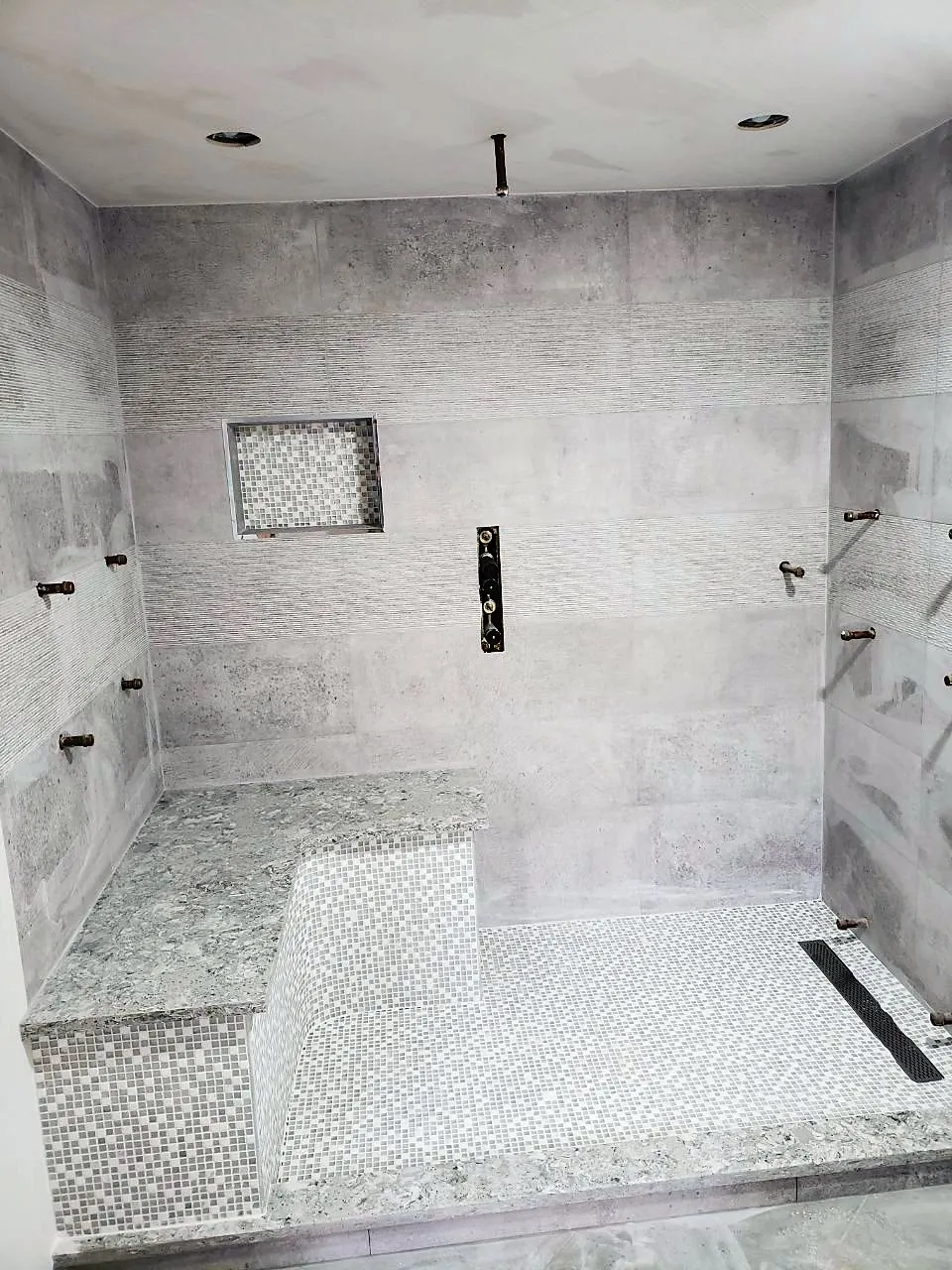
- Photos of their own jobs at every stage, not just finished rooms. A contractor who shows you cement board and membrane is proud of what is behind the tile.
- A past client you can call, ideally in a building like yours.
- How they answer “what went wrong on your last job and how did you handle it?” Every job has something.
- Whether they ask about your building’s rules before quoting. It means they have done this before.
6. Red flags, in the order we see them
- Cash discount for no paperwork.
- A deposit above a third, or any pressure to pay today.
- “You don’t need a permit for that” when plumbing or electrical moves.
- No business address, only a cell number.
- A total price with no line items.
- Start date “whenever you’re ready” with no schedule after that.
- Reluctance to name the plumber and electrician.
7. What a good first visit looks like
The contractor measures, photographs, opens the vanity to look at the plumbing, asks about the building and your timeline, and tells you what they do not know yet. The written estimate arrives within a few days, lists what is included and what is not, and names a realistic start date based on their current schedule and your building’s approval process.
That is the standard we hold ourselves to. If you are comparing us with others, hold everyone to it.